

Introduction
The XDC Network has steadily positioned itself as a practical blockchain for trade finance and real-world asset (RWA) use cases. Its design focuses on what these markets actually need—low transaction costs, predictable performance, and the ability to handle real financial workflows at scale.
At the core of the network is a delegated proof-of-stake model supported by masternodes. These nodes are responsible for validating transactions and maintaining the reliability of the network. For those looking to participate directly, the setup process is documented here: https://docs.xdc.network/learn/masternode
Ref Article:
- How to Host an XDC Masternode Using Fireblocks via WalletConnect (Step-by-Step Guide)
- Standard Guide: How to Host an XDC Masternode
As more real-world financial instruments move on-chain, infrastructure alone is not enough. Clear, structured, and accessible data becomes equally important. This is where TradeFi Network fits in.
Why Transparency Matters in RWA and Private Credit
Trade finance and private credit have traditionally operated behind closed systems. Information is often fragmented, documentation is manual, and verifying underlying assets can be time-consuming.
Blockchain changes part of this by putting transactions and asset representations on-chain. But transparency is not just about recording data—it’s also about how easily that data can be understood and accessed.
Stablecoins play a critical role in this evolution. When settlements are executed using stablecoins, each transaction is recorded on-chain, creating a verifiable and auditable trail of capital movement. This is particularly important in private credit markets, where clarity around fund flows and settlement is essential.
The combination of tokenized assets and stablecoin-based settlement is gradually making these markets more open, traceable, and efficient.
Where TradeFi Network Fits
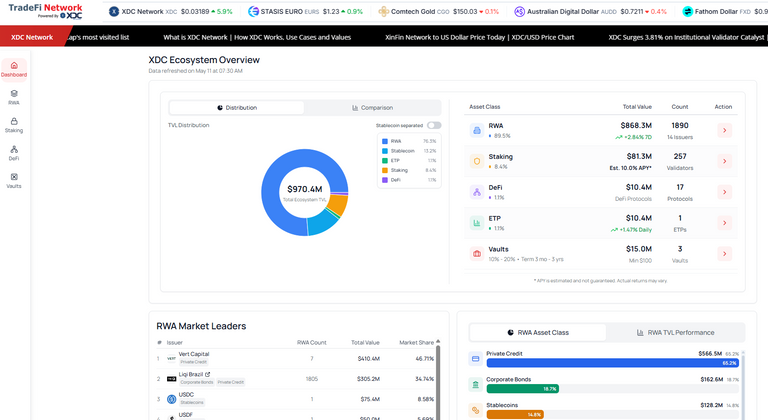
TradeFi Network is built to make sense of this growing ecosystem. It does not act as a marketplace or a trading platform. Instead, it focuses on organizing information in a way that is easier to navigate and evaluate.
As more projects enter the RWA space, having a single place where data is structured and comparable becomes increasingly valuable.
What the Platform Actually Does
One of the strengths of TradeFi Network is its simplicity. Rather than trying to do everything, it focuses on a few core functions:
Listing and discovery
Projects can present their offerings in a consistent format, making it easier for others to review and compare them.
Access the Official Listing Page
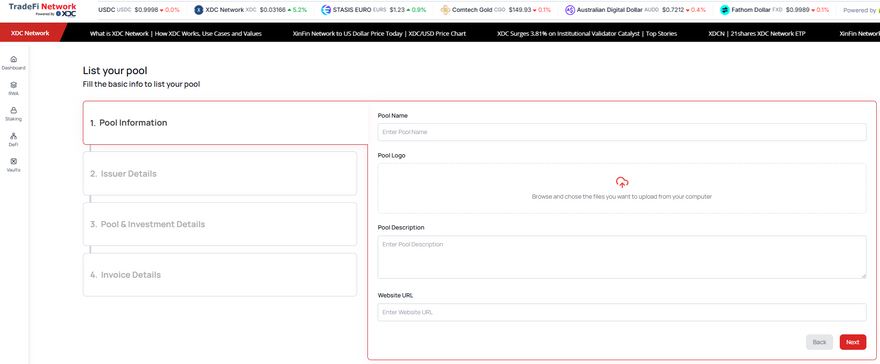
Standardized data structure
Each listing follows a defined framework—covering project details, issuer information, and asset-specific data. This avoids the inconsistency that often comes with fragmented sources.
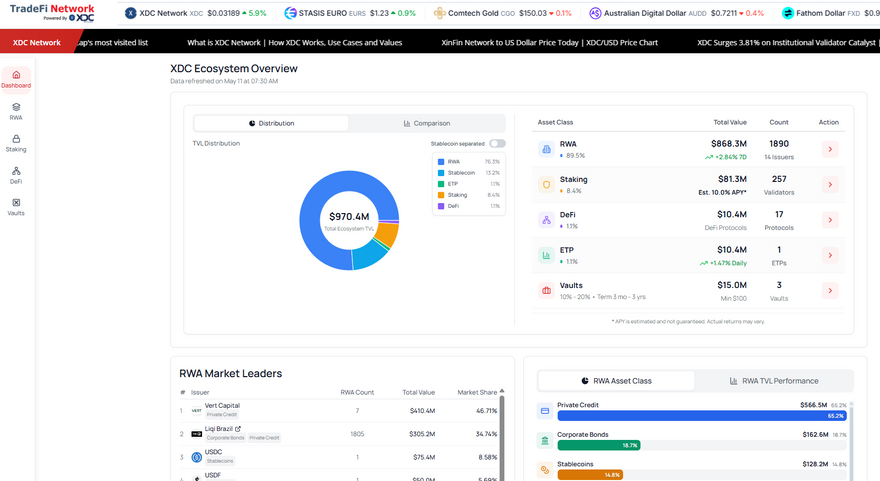
Supporting context through resources
The platform also includes material explaining how different trade finance instruments work, from invoice financing to tokenized bonds. This is especially useful for users who are still getting familiar with RWA concepts.
Real-world examples
Case studies provide a closer look at how these models are being applied in practice, rather than just in theory.
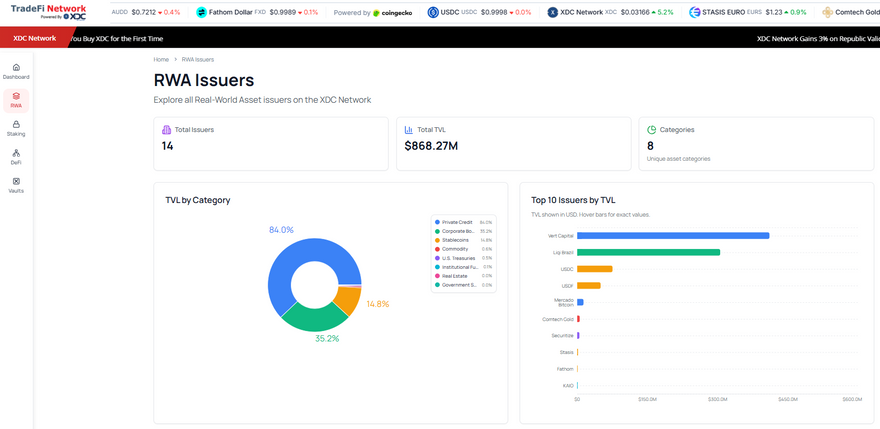
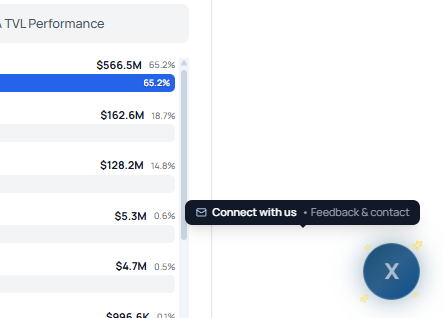
👉 If you are building in RWA or private credit and would like to connect with the TradeFi Network team regarding data listing or integration, you can use the XDC logo Floating Action Button located at the bottom-right corner of the platform.
Connecting Infrastructure and Data
The relationship between XDC Network and TradeFi Network is fairly straightforward.
- XDC provides the infrastructure layer — where assets are issued, transactions are processed, and settlements occur.
- TradeFi Network provides the data layer — where those activities are organized and presented in a usable format.
Masternodes ensure that the network continues to run reliably in the background, while platforms like TradeFi Network make the resulting data easier to interpret.
Additionally, TradeFi Network is evolving beyond a single ecosystem approach, with integrations being expanded to support data from other Layer 1 blockchains as well. This allows broader visibility across multiple ecosystems rather than being limited to one network.
Together, they address both sides of the equation: execution and visibility.
The Role of Stablecoins in This Structure
Stablecoins are becoming a practical bridge between traditional finance and blockchain-based systems.
In RWA and private credit markets, they help by:
- Enabling on-chain settlement without exposure to price volatility
- Creating a transparent record of capital movement
- Simplifying cross-border transactions
Because these transactions are recorded on-chain, they can be independently verified. This adds a level of transparency that is often missing in traditional financial systems.
Positioning Within the Broader Data Ecosystem
As the RWA sector grows, several data platforms have emerged to improve visibility across crypto and tokenized assets. Platforms such as RWA.xyz, DefiLlama, and CoinMarketCap have contributed significantly to data aggregation and market tracking.
TradeFi Network complements this landscape by focusing specifically on trade finance and private credit use cases, offering more structured and domain-specific insights within the RWA segment.
Who This Is For
TradeFi Network is not limited to a single type of user. It is useful for:
- Teams building RWA or trade finance projects
- Institutions looking to understand emerging on-chain opportunities
- Developers exploring how these systems are structured
- Anyone tracking the growth of tokenized finance on XDC
It is best understood as a reference point for the ecosystem, rather than a point of execution.
Closing Thoughts
As real-world assets continue moving onto blockchain infrastructure, the conversation is shifting from “can this be done?” to “how is this being implemented in practice?”
Reliable infrastructure like XDC Network is one part of the answer. Transparent settlement through stablecoins is another. But without clear and structured access to information, adoption remains limited.
TradeFi Network addresses that gap by focusing on something simple but essential—making data easier to find, understand, and compare.
In a space that is often complex, that clarity is what helps the ecosystem move forward.





Discussion (0)